
Best Ecommerce Platform in the Philippines: Which One Fits Your Store?
Choosing the best ecommerce platform in the Philippines depends on what you sell, how you want to get paid, and how fast you expect to grow. Some platforms are easier for beginners. Others give you more control, better design flexibility, or stronger automation for larger stores.
If you are a Filipino seller building an online store, the right platform should help you:
- launch quickly without unnecessary technical work
- accept payments your customers already use
- manage shipping and orders with less manual effort
- scale as your product catalog and traffic grow
- keep costs predictable as your business expands
Below is a practical comparison to help you choose the right fit.
Quick comparison of popular ecommerce platforms
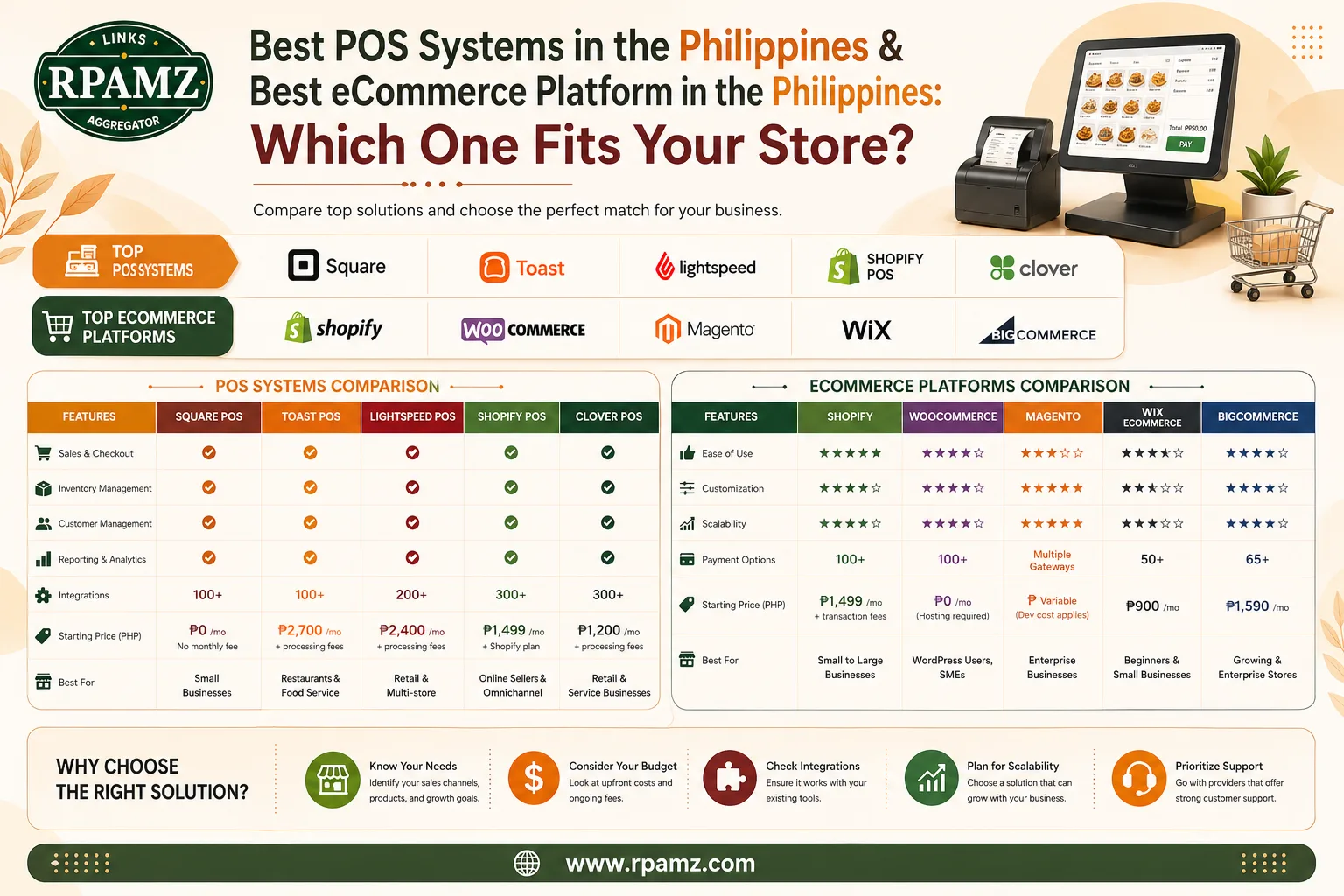
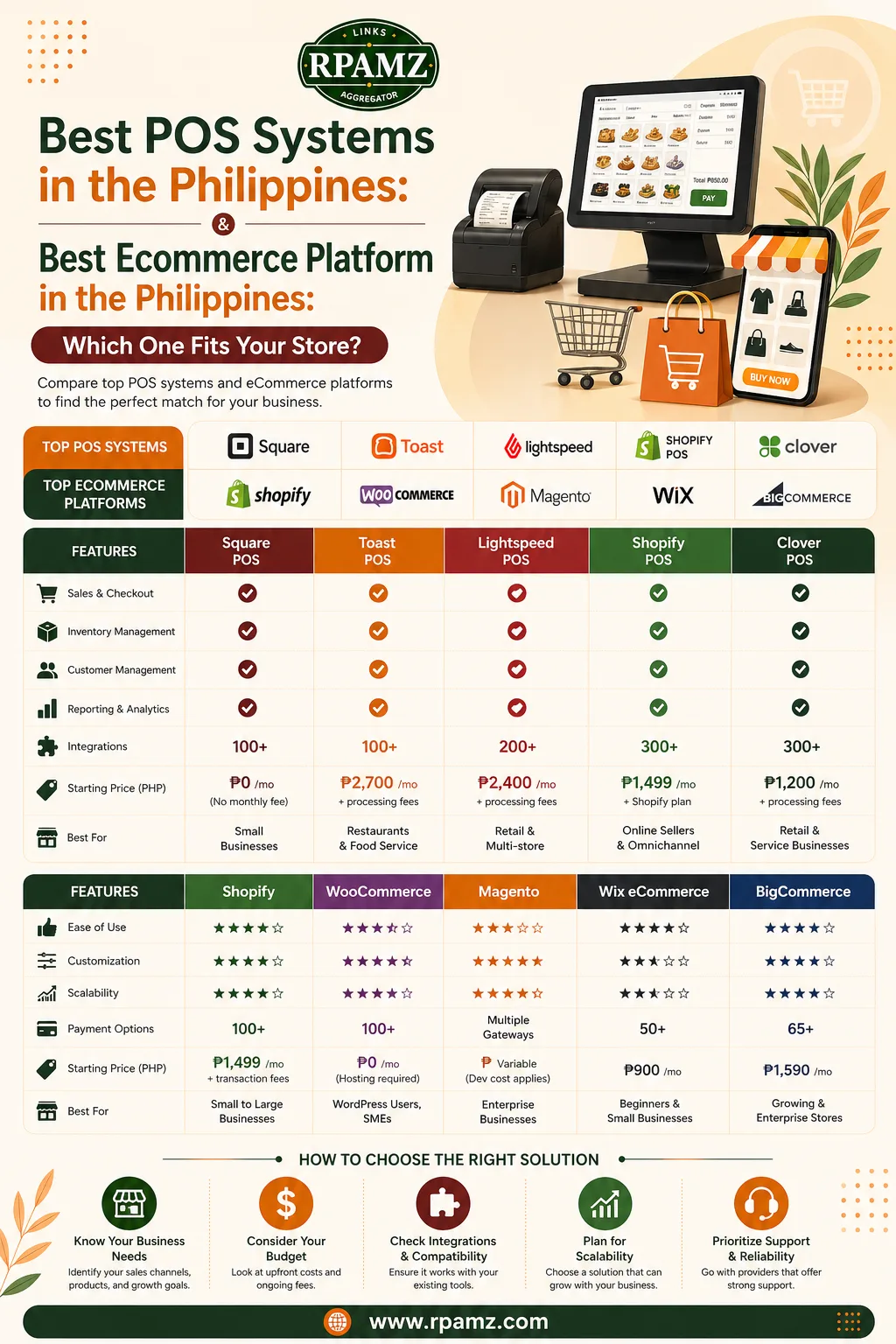
| Platform | Best for | Ease of use | Payment flexibility | Scalability | Typical tradeoff |
|---|---|---|---|---|---|
| Shopify | Sellers who want a polished store and easy setup | High | Strong | High | Monthly fees and app costs can add up |
| WooCommerce | WordPress users who want flexibility | Medium | Strong | High | Needs more setup and maintenance |
| Wix eCommerce | Small businesses that want simplicity | High | Moderate | Medium | Less advanced for complex stores |
| BigCommerce | Growing stores that want built-in features | Medium | Strong | High | Can feel more advanced than beginner tools |
| Squarespace Commerce | Brands focused on design and presentation | High | Moderate | Medium | Less ideal for heavy catalog needs |
| Shopee/Lazada store | Sellers who want marketplace traffic | High | Moderate | Medium | Less control over branding and customer data |
What Filipino sellers should look for
When comparing ecommerce platforms in the Philippines, focus on practical business needs instead of features that only look good on paper.
1. Setup cost
Your real startup cost includes more than the subscription price. Consider:
- platform monthly fee
- domain name
- theme or design costs
- payment gateway fees
- plugin or app costs
- developer help, if needed
A low monthly plan may still become expensive if you need many paid add-ons.
2. Local payment options
For Philippine customers, payment convenience matters. Your platform should support or integrate with payment methods such as:
- credit and debit cards
- bank transfer options
- e-wallets where available
- cash on delivery workflows, if your operations support it
- payment gateways that work well in the Philippines
Before choosing a platform, check whether your preferred payment provider is supported and how easy it is to configure.
3. Shipping and fulfillment support
Selling locally often means handling shipping across multiple islands, varying delivery timelines, and customer questions about tracking. The best platform should make it easier to:
- create shipping rates
- set delivery zones
- print order details
- connect with courier workflows
- update customers on order status
4. Ease of use
If you want to launch fast, choose a platform with:
- simple product management
- ready-made templates
- easy checkout setup
- clear dashboard reporting
- minimal maintenance
If you already have a developer or technical team, a more flexible platform may be worth the learning curve.
5. Scalability
A platform that works for 20 orders a month may struggle when you reach 200 or more. Think about:
- product variants
- inventory tracking
- multi-channel selling
- automation
- analytics
- marketing integrations
Choose something that fits your next 12 to 24 months, not only your current stage.
Best ecommerce platform options in the Philippines
Shopify
Shopify is one of the easiest platforms to use if you want to launch quickly and keep the store experience polished.
Best for:
- first-time store owners
- brand-focused businesses
- sellers who want a hosted solution
Pros:
- simple setup
- strong app ecosystem
- reliable performance
- good for scaling
Cons:
- monthly fees
- some useful features require paid apps
- customization can increase complexity
Shopify is often a strong choice if you want convenience and room to grow.
WooCommerce
WooCommerce is a flexible ecommerce plugin for WordPress. It is a good fit if you want more control over your site and are comfortable managing a website.
Best for:
- businesses already using WordPress
- sellers who want flexibility
- users who prefer owning their setup
Pros:
- highly customizable
- large plugin ecosystem
- flexible payment and shipping integrations
- good long-term control
Cons:
- more setup work
- requires hosting and maintenance
- performance depends on configuration
WooCommerce can be a smart option for sellers who want control and can manage a bit more technical work.
Wix eCommerce
Wix is a user-friendly choice for small businesses that want to build a store without a steep learning curve.
Best for:
- small catalogs
- service businesses with a few products
- beginners who value simplicity
Pros:
- easy drag-and-drop editing
- quick launch
- clean templates
Cons:
- less flexible for advanced operations
- not ideal for complex ecommerce workflows
Wix is a practical starting point if your store is simple and you want speed over depth.
BigCommerce
BigCommerce offers many built-in ecommerce features, which can help growing businesses reduce reliance on too many apps.
Best for:
- scaling product businesses
- merchants with larger catalogs
- teams that want built-in tools
Pros:
- strong ecommerce features
- good for growth
- fewer add-ons needed for core functions
Cons:
- can feel more advanced
- may be more than a small shop needs
BigCommerce is worth considering if your store is already growing and you want more capability out of the box.
Shopee or Lazada storefronts
If your goal is to reach buyers quickly, marketplaces can be useful because they already have traffic. They are not full standalone ecommerce platforms, but they are part of many Filipino sellers' online strategy.
Best for:
- sellers testing demand
- businesses that want marketplace exposure
- brands that can manage marketplace competition
Pros:
- built-in audience
- easier to get early sales
- familiar checkout behavior for buyers
Cons:
- less brand control
- platform fees and competition
- limited customer ownership compared with your own website
Marketplaces are useful, but many sellers eventually add their own store for long-term brand building.
Which platform fits your store type?
If you are a beginner
Choose a platform that minimizes setup friction. Shopify and Wix are usually easier for first-time sellers.
If you already use WordPress
WooCommerce is often the most logical option because it extends your existing website.
If you want to scale fast
Shopify and BigCommerce are strong options for businesses expecting higher volume and more advanced ecommerce needs.
If you want the fastest path to sales
A marketplace presence on Shopee or Lazada can help you validate products quickly, then you can build your own store later.
If design matters most
Squarespace or Shopify can work well for brands that want a more premium look.
Common mistakes to avoid
Many sellers choose a platform based only on the lowest monthly fee. That can lead to problems later.
Avoid these mistakes:
- choosing a platform that does not support your payment workflow
- ignoring shipping setup until launch day
- using too many plugins without checking performance
- picking a platform that is hard to manage without technical help
- not planning for future product growth
A better decision is the one that matches your store operations, not just your current budget.
Final recommendation
There is no single best ecommerce platform in the Philippines for every seller.
- Shopify is great for simplicity and scale.
- WooCommerce is best for flexibility and WordPress users.
- Wix works well for smaller, simpler stores.
- BigCommerce suits growing businesses that want more built-in features.
- Marketplaces help with visibility, but they should not be your only sales channel if you want long-term control.
The best choice depends on your budget, your technical comfort, and how serious you are about scaling.
If you are still comparing tools, use RPAMZ to explore ecommerce platform alternatives and see which options fit your business goals before you commit.
FAQ
What is the best ecommerce platform in the Philippines for beginners?
Shopify and Wix are usually the easiest for beginners because they offer simple setup, templates, and a low learning curve.
Is WooCommerce good for Filipino sellers?
Yes. WooCommerce is a strong option if you already use WordPress or want more control over customization, payments, and shipping.
Which platform is best for local payment methods?
The best choice depends on your payment gateway setup, not just the platform itself. Always check whether your preferred provider integrates smoothly with the platform.
Should I sell on a marketplace or build my own store?
Many Filipino sellers do both. Marketplaces can help you get traffic fast, while your own store gives you more branding control and customer ownership.
What is the most scalable ecommerce platform?
Shopify and BigCommerce are often strong for scaling, while WooCommerce can also scale well if it is properly set up and maintained.