
Shopify Philippines Pricing: Costs, Plans, and Hidden Fees
If you’re researching shopify philippines pricing, the short answer is this: Shopify is easy to start with, but the real cost depends on the plan you choose, your payment method, and the apps or themes you add later.
For Filipino sellers, Shopify can work well if you want a polished store, strong checkout features, and room to scale. But before you subscribe, it helps to understand the full cost picture—not just the monthly fee.
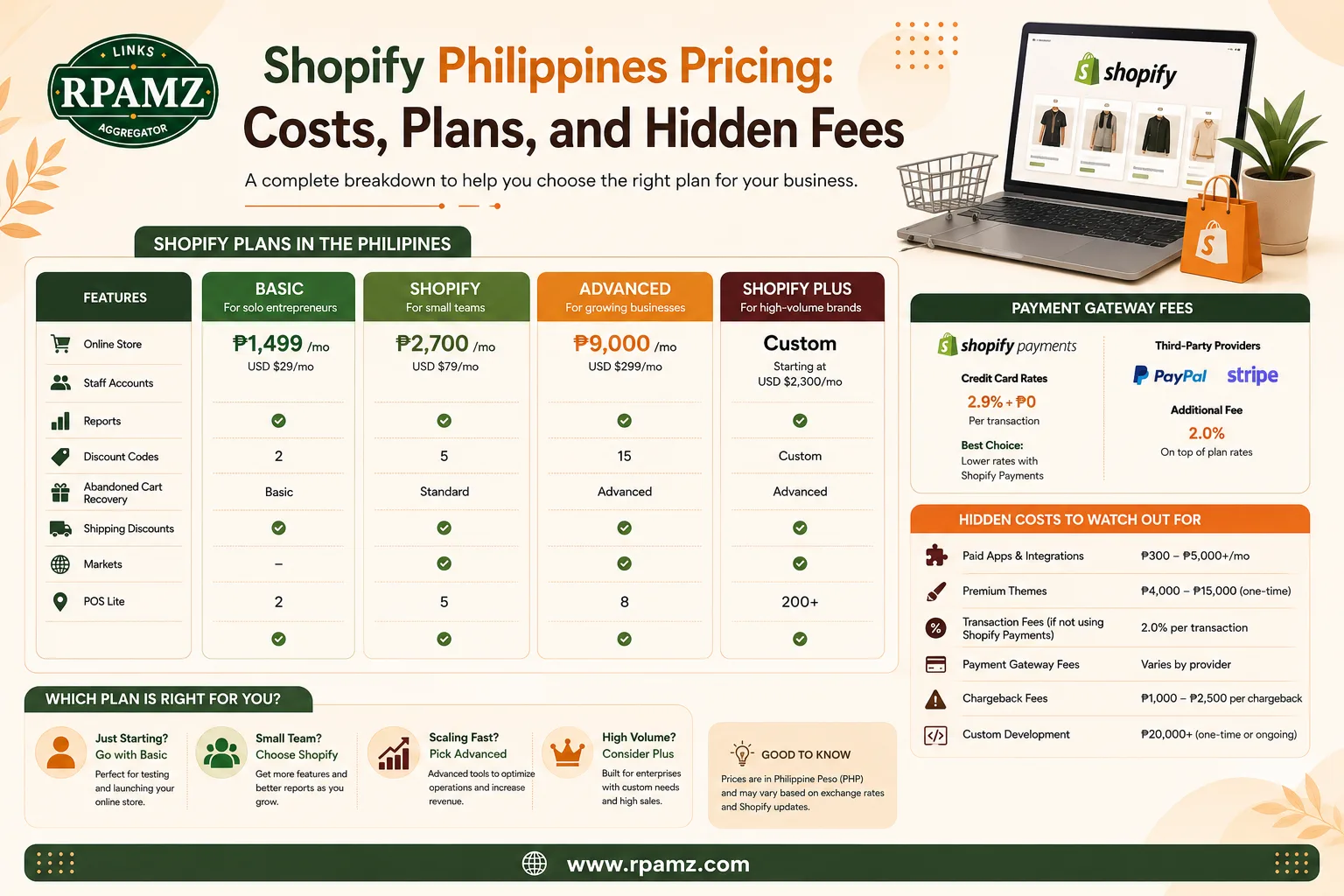
Shopify pricing plans at a glance
Below is a simple comparison of Shopify’s main plans. Prices can change, so always confirm the latest rates on Shopify’s official pricing page before you sign up.
| Plan | Best for | Typical monthly cost | Notes |
|---|---|---|---|
| Basic Shopify | New sellers and small stores | Starts at a lower monthly fee | Good entry point, but costs can rise with apps and fees |
| Shopify | Growing businesses | Mid-tier monthly fee | Adds more reporting and lower payment processing costs |
| Advanced Shopify | Larger stores | Higher monthly fee | Designed for scaling businesses with more complex needs |
What Filipino sellers usually pay for Shopify
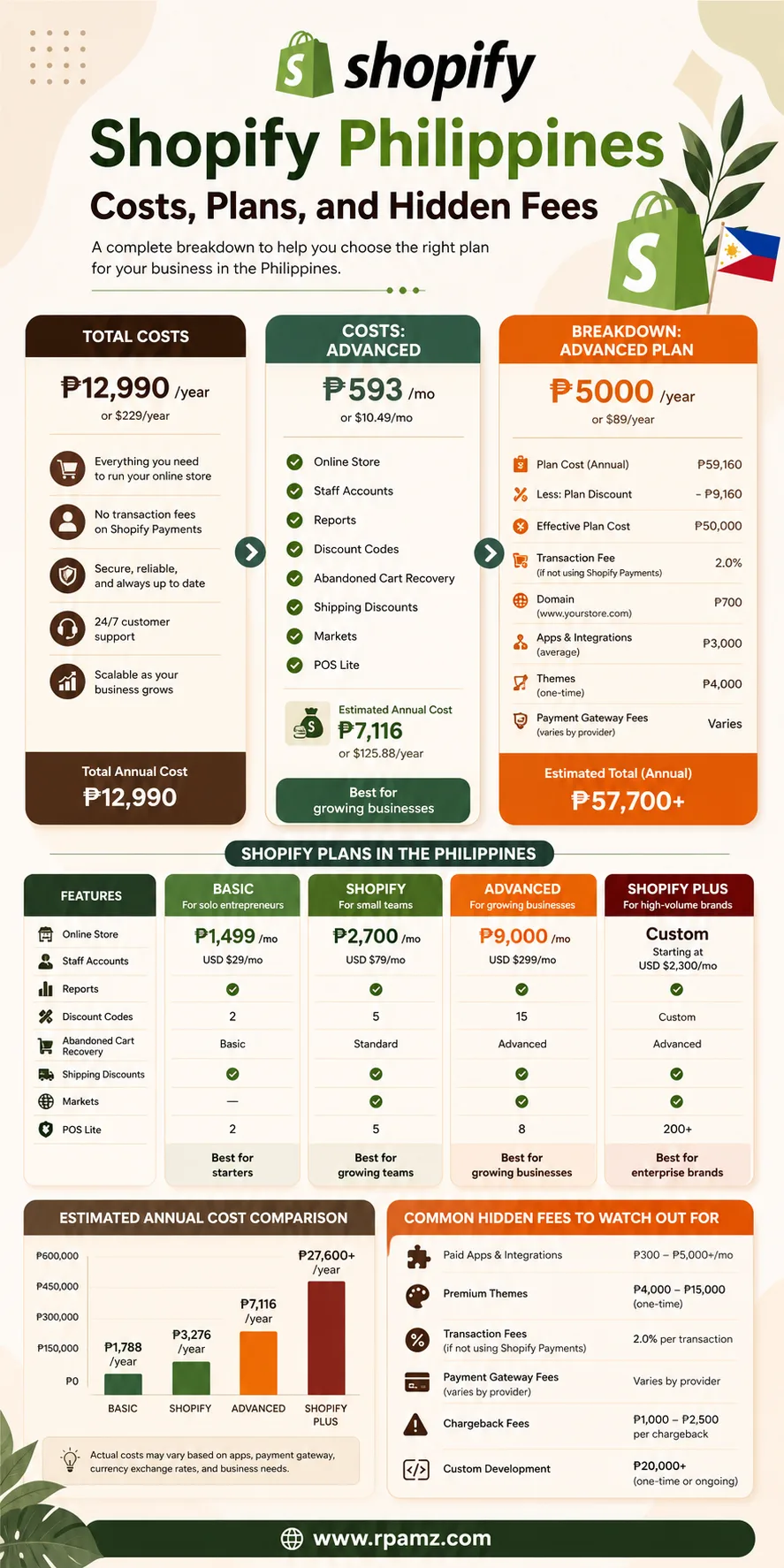
When people search for shopify philippines pricing, they often want to know the real monthly cost in pesos. Shopify bills in its own supported currency depending on your account settings, but the practical cost for a Filipino business includes:
- Monthly plan subscription
- Payment processing fees
- Transaction fees if you do not use Shopify Payments in your region
- App subscriptions
- Theme costs
- Domain registration
- Developer or setup costs, if you hire help
1) Monthly subscription fee
This is the base cost of using Shopify. Your plan determines the features you get, such as staff accounts, reporting, and shipping tools.
2) Payment processing fees
If you sell online, you need a way to accept payments. Shopify’s fees depend on the payment gateway you use. In many markets, using Shopify Payments can reduce extra transaction fees, but availability depends on region.
For Filipino sellers, it is important to check which payment providers are supported for your store and what rates they charge.
3) Transaction fees
Some stores pay an additional fee per sale when using third-party payment providers. This is one of the most overlooked parts of Shopify pricing.
If your store processes many orders, even a small fee can add up quickly.
4) Apps and add-ons
Many Shopify stores rely on apps for:
- Upsells
- Reviews
- Email marketing
- Abandoned cart recovery
- Loyalty programs
- Shipping tools
Some apps are free, but many charge monthly fees. This can turn a simple store into a more expensive setup than expected.
5) Themes and design
Shopify has free themes, but many merchants buy premium themes for better design and functionality. A paid theme is usually a one-time cost, but it can still be a meaningful upfront expense.
6) Domain and branding
You may also need to purchase a custom domain name if you want a professional store address. This is usually an annual cost.
Hidden fees to watch out for
The biggest surprise for many sellers is that the monthly plan is only part of the total cost.
Here are the most common hidden or overlooked expenses:
- Paid apps for features that are not built into your plan
- Transaction fees from your chosen payment setup
- Currency conversion or payment provider charges
- Third-party theme purchases
- Freelance setup or maintenance costs
- Email marketing software subscriptions
- SMS or automation tools for promotions
If you are just starting out, try to launch with the smallest tool stack possible. Add paid tools only when they clearly improve sales or reduce time spent on manual work.
Is Shopify worth it in the Philippines?
Shopify is worth considering if you want:
- A professional-looking store
- Easy store management
- Strong ecommerce features
- A platform that can grow with your business
It may be less ideal if you:
- Want the lowest possible monthly cost
- Prefer a simpler setup
- Only need a basic product page and checkout
- Want to avoid paying for multiple apps
For some Filipino sellers, Shopify is a smart long-term platform. For others, a different ecommerce tool may offer better value depending on budget and use case.
Shopify vs other ecommerce options
Here is a quick comparison for context.
| Platform | Typical cost style | Best for | Main trade-off |
|---|---|---|---|
| Shopify | Monthly subscription + apps + fees | Brands that want scalability | Can get expensive with add-ons |
| WooCommerce | Plugin-based, hosting required | Sellers who want flexibility | More setup and maintenance |
| Wix Ecommerce | Lower-complexity site builder | Small stores and beginners | Less ecommerce depth than Shopify |
| BigCommerce | Subscription-based | Growing catalogs and teams | Can feel more advanced for beginners |
If your goal is to compare features and pricing before committing, RPAMZ can help you review ecommerce tools and alternatives side by side.
How to estimate your real Shopify budget
A practical way to estimate shopify philippines pricing is to build a monthly budget like this:
- Choose your Shopify plan
- Add your payment processing costs
- Estimate app subscriptions
- Include theme or setup costs amortized over time
- Add domain and operational expenses
Example checklist:
- Shopify plan: monthly subscription
- Payment fees: depends on gateway and order volume
- Apps: review app, email app, upsell app, shipping app
- Domain: yearly cost
- Design/setup: one-time or recurring support
This gives you a more realistic view than the advertised plan price alone.
Tips for keeping Shopify costs under control
- Start with the lowest plan that fits your needs
- Use free themes and free apps where possible
- Remove apps you do not actively use
- Compare payment gateways before going live
- Avoid buying too many tools before you get sales data
- Track your actual cost per order every month
Final thoughts
Shopify can be a solid ecommerce platform for Filipino sellers, but the true cost is more than the base subscription. If you are evaluating shopify philippines pricing, focus on total monthly spend, not just the headline plan price.
If you want to compare Shopify with other ecommerce tools, alternatives, and business software that fit Filipino budgets, check RPAMZ for practical comparisons before you decide.
FAQ
How much does Shopify cost in the Philippines?
Shopify’s cost depends on the plan you choose, plus payment fees, apps, themes, and other add-ons. Always check the latest official pricing before subscribing.
Are there hidden fees in Shopify?
Yes, there can be extra costs such as app subscriptions, payment processing fees, transaction fees, premium themes, and setup costs.
Can Filipino sellers use Shopify?
Yes. Many Filipino sellers use Shopify, but you should confirm payment provider support, fee structure, and local business requirements before launching.
Is Shopify cheaper than WooCommerce?
Not always. WooCommerce may have lower monthly platform fees, but you still need hosting, plugins, and maintenance. Shopify is usually easier to manage, while WooCommerce can be more flexible.
What is the best way to compare Shopify with other tools?
Compare total cost, payment options, app dependency, ease of use, and scalability. RPAMZ is a good place to review alternatives and choose the right ecommerce stack for your business.